
WordPress powers over 43% of all websites on the internet — and in 2026, it remains the most practical CMS choice for businesses that need flexibility, scalability, and a vast ecosystem of tools without building everything from scratch.
- Why WordPress Still Leads
No other CMS matches the combination of ease of use, developer freedom, and plugin ecosystem that WordPress offers. Whether you need a corporate website, a content-heavy blog, an e-commerce store, or a membership platform, WordPress can be built, extended, and maintained without being locked into a proprietary system. - The Block Editor Changes Everything
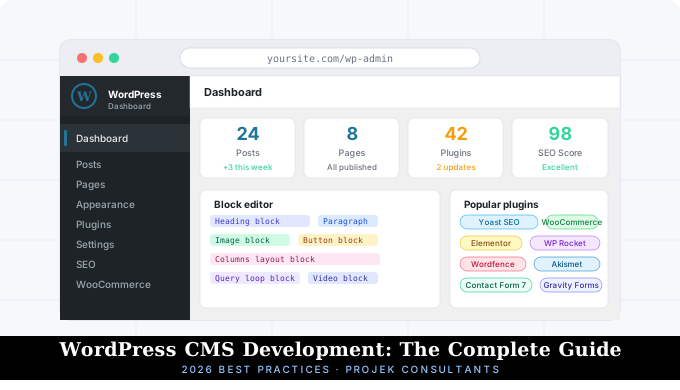
The Gutenberg block editor has matured significantly. In 2026, full-site editing allows developers to build entire page templates — headers, footers, archive pages — using blocks and patterns. This gives clients genuine control over their content without touching a line of code, while developers retain complete design control through custom block themes. - Plugin Selection Is a Strategy Decision
A poorly chosen plugin stack is the fastest way to slow your site down and open security vulnerabilities. For every WordPress build, the essentials are a reliable SEO plugin (Yoast or Rank Math), a performance and caching layer (WP Rocket or LiteSpeed Cache), a security tool (Wordfence), and a form builder. Everything else should earn its place. - Performance and Core Web Vitals
Google’s Core Web Vitals directly affect your search ranking. A properly optimised WordPress site — compressed images, minimal render-blocking scripts, a CDN, and lazy loading — can score 90+ on PageSpeed with no compromise on design quality.
At Projek Consultants, we build custom WordPress websites across Singapore, Dubai, and Mumbai that are fast, secure, and built to scale.
Need a custom WordPress website? Talk to our team →