
Most businesses approach digital marketing channel by channel — running ads here, posting on social there, publishing the occasional blog. The businesses that grow consistently treat digital marketing as a system: a connected funnel where every channel has a role and every rupee spent moves a customer closer to conversion.
The Funnel Is Your Framework
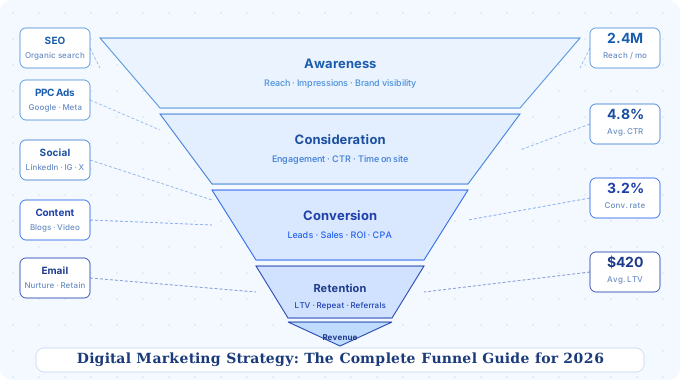
A well-structured digital marketing funnel has four stages. At the top, awareness channels — SEO, paid search, and social media — bring new audiences to your brand. In the middle, consideration content — blog posts, case studies, comparison pages, and retargeting ads — keeps your brand visible while prospects evaluate their options. At the bottom, conversion tactics — landing pages, offers, email sequences, and strong calls to action — turn interest into revenue. Below that, retention strategies — loyalty programmes, personalised email, and exceptional service — build the lifetime value that makes your economics work.
Choose Channels With Purpose
Each channel serves a different part of the funnel. SEO drives compounding organic traffic over time. PPC generates immediate, measurable demand. Social media builds brand familiarity and community. Content marketing establishes authority. Email marketing nurtures relationships and drives repeat purchases. Running all five without a clear strategy produces noise. Running three well, mapped to your funnel, produces growth.
Measure What Moves the Business
Vanity metrics — impressions, followers, page views — tell you very little about business health. The metrics that matter are cost per acquisition, conversion rate, customer lifetime value, and return on ad spend. Track these monthly, adjust your channel mix accordingly, and your marketing becomes an investment rather than an expense.
At Projek Consultants, we build and manage full-funnel digital marketing strategies for businesses across Singapore, Dubai, and Mumbai.
Ready to build a strategy that works? Talk to our team →